The Global Dance of Crude Oil Prices: Understanding the "Barrel Öl Preisentwicklung"
The warmth and comfort of your home often depend on factors far beyond your thermostat settings. For many households, heating oil is a vital resource, and its cost is intrinsically linked to the volatile global energy markets. Specifically, two major international forces play a pivotal role in determining what you pay: the price of a barrel of crude oil and the Euro/USD exchange rate. Understanding these dynamics is key to navigating your heating expenses effectively.
Crude oil stands as the foundational raw material for a vast array of petroleum products, including the heating oil, diesel, and petrol we rely on daily. Its journey from extraction to your heating tank begins on global trading floors where it's typically bought and sold in units called "barrels," each containing approximately 159 liters.
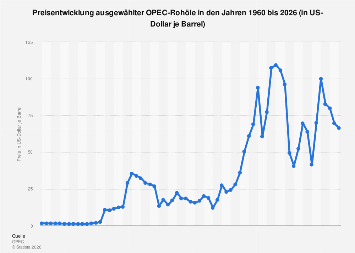
The "Barrel Öl Preisentwicklung" – or crude oil price development – is characterized by its historical volatility. Over decades, from the 1960s to projections extending to 2025, prices have seen dramatic fluctuations. Significant geopolitical events and economic shifts leave their clear mark on these trends. For instance, the infamous oil crises of the 1970s and the profound global economic downturn in 2009 are stark examples of how external factors can send oil prices spiraling or plummeting. Historically, the year 2012 recorded the highest average annual price for a barrel of OPEC crude oil, illustrating periods of extreme market conditions. Looking ahead, the average price for an OPEC oil barrel in 2025 was projected to be around 69.59 US dollars, though such forecasts are always subject to change given the market's inherent unpredictability.
At the heart of crude oil pricing lies the fundamental economic principle of supply and demand. Any adjustments in production, such as cuts or expansions, directly impact the oil price if demand remains constant. The Organization of the Petroleum Exporting Countries (OPEC), founded in Baghdad in 1960, is a major player in this equation. Comprising twelve member nations, OPEC is responsible for over a third of the world's total crude oil production and controls more than two-thirds of global oil reserves (defined as technically recoverable and economically viable quantities). Within this influential intergovernmental organization, Saudi Arabia stands out as the production powerhouse, contributing roughly a third of OPEC's total output.
A prime example of OPEC's market influence occurred in 2022. Faced with rapidly rising prices driven by surging global demand, OPEC decided to moderately increase its oil production by 400,000 barrels per day. Such decisions underscore the collective power of these nations to stabilize or influence the market. For a deeper dive into the historical shifts and future outlook of these crucial prices, explore our related article:
OPEC Crude Oil Prices: Past Volatility & Future Outlook to 2025.
The Euro/USD Exchange Rate: Your Heating Oil's Second Taktgeber
While the barrel price of crude oil sets the base cost, its journey to your heating tank involves another critical determinant for European consumers: the exchange rate between the US Dollar and the Euro. This is because, irrespective of where the oil originates, crude oil is predominantly traded in US Dollars on the international energy markets.
For residents in Eurozone countries, this means that even if the dollar-denominated price of a barrel of oil remains stable, fluctuations in the Euro/USD exchange rate can significantly alter the final cost of heating oil in Euros. The US Dollar effectively acts as a "Taktgeber" – a pace-setter or metronome – for heating oil prices in Europe.
Let's illustrate with an example: imagine the price of a barrel of Brent crude, the benchmark for Europe, is $80.
- If 1 Euro is worth 1.10 US Dollars, that $80 barrel costs approximately 72.73 Euros ($80 / 1.10).
- However, if the Euro weakens, and 1 Euro is now only worth 1.05 US Dollars, that same $80 barrel now costs approximately 76.19 Euros ($80 / 1.05).
As you can see, a weakening Euro – meaning each Euro buys fewer US Dollars – directly translates to higher costs for dollar-denomdenominated products like oil. Conversely, a stronger Euro, where one Euro buys more US Dollars, would effectively make oil cheaper for European consumers. This dynamic means that shrewd heating oil buyers must continually monitor not just the crude oil price, but also the fluctuating value of the Euro against the Dollar. A deep understanding of these intertwined forces is crucial for anyone looking to optimize their energy expenditure. For more insights into how various global factors, including the dollar, influence oil prices, read our article:
Decoding Crude Oil Prices: Supply, Demand, & US Dollar Impact.
From Crude to Heating Oil: The Journey and Additional Factors
The path from raw crude oil to the heating oil in your tank involves several processing steps and additional costs that accumulate along the way. Understanding these stages can provide a more complete picture of your final heating bill.
Once crude oil arrives at a refinery, it undergoes a distillation process that separates it into various components, including Gasoil. Gasoil is the immediate precursor, or "Vorprodukt," to both heating oil and diesel. Much like crude oil itself, Gasoil is actively traded on international commodity futures markets, and its price development is a direct and crucial indicator for the cost of refined petroleum products. Tracking the Gasoil price is therefore just as important for heating oil buyers as monitoring the raw crude oil price and the Euro/USD exchange rate.
A curious but significant detail in this process is the addition of a red dye. At the refinery or a tax-controlled tank farm, this red dye is mixed into the Gasoil intended for heating purposes. This coloration serves a critical tax-related function: it visibly distinguishes heating oil, which is subject to lower taxation, from diesel, which carries a higher fuel tax. This ensures that heating oil is used exclusively for its intended purpose and not illicitly as vehicle fuel.
Beyond the cost of Gasoil, several other factors contribute to the final price you pay per liter of heating oil. These include:
- Storage Costs: The expense of holding crude oil and refined products in large tanks.
- Transport Costs: The logistics of moving oil from refineries to distributors and finally to individual consumers.
- Trading Margins: The profit margins applied by the various intermediaries in the supply chain, including wholesalers and local retailers.
- Taxes and Duties: National and regional taxes, which can vary significantly and add a substantial percentage to the final price.
Ultimately, the complex interplay between the crude oil price, the Euro/USD exchange rate, and the Gasoil price, coupled with these additional logistical and administrative costs, determines your precise heating oil expense. By keeping an eye on these interconnected market indicators, consumers can become more informed and potentially more strategic in their purchasing decisions.
Practical Strategies for Managing Your Heating Costs
Navigating the complexities of global energy markets to manage your household heating costs might seem daunting, but armed with the right knowledge, you can adopt several practical strategies. Being proactive and informed can significantly impact your annual heating expenses.
1. Monitor Key Market Indicators:
Make it a habit to regularly check the price of Brent crude oil (as the European benchmark), the Euro/USD exchange rate, and the price development of Gasoil. Websites specializing in energy prices often provide this information in real-time. Understanding the "Barrel Öl Preisentwicklung" in particular, combined with currency shifts, empowers you to anticipate price movements.
2. Strategic Purchasing:
If you have storage capacity for heating oil, timing your purchases can lead to substantial savings. Consider buying when:
- Crude oil prices are experiencing a downward trend.
- The Euro is strong against the US Dollar, making dollar-denominated oil cheaper in Euro terms.
- Gasoil prices are favorable, as this directly reflects the cost of the refined product.
Avoid last-minute purchases during peak demand or adverse market conditions, if possible. Planning ahead, particularly during warmer months when demand for heating oil is typically lower, can often result in better prices.
3. Enhance Home Energy Efficiency:
While market timing is valuable, investing in your home's energy efficiency offers long-term, sustainable savings regardless of oil price fluctuations.
- Improve Insulation: Proper insulation in your attic, walls, and floors can drastically reduce heat loss.
- Upgrade Heating Systems: Modern condensing boilers are significantly more efficient than older models, consuming less fuel to produce the same amount of heat.
- Smart Thermostats: Programmable or smart thermostats allow you to optimize heating schedules, reducing consumption when you're away or asleep.
- Seal Drafts: Simple measures like sealing gaps around windows and doors can prevent warm air from escaping.
4. Consider Bulk Buying or Group Orders:
If feasible, teaming up with neighbors to place a larger collective order for heating oil can sometimes unlock volume discounts from suppliers. This can reduce both the per-liter price and potentially transport costs.
5. Regular System Maintenance:
Ensure your heating system is serviced annually by a qualified technician. A well-maintained boiler operates more efficiently, consumes less fuel, and has a longer lifespan, preventing costly breakdowns.
By integrating these strategies, you move beyond merely reacting to rising prices and actively take control of your heating budget.
Conclusion
The journey from a barrel of crude oil in a distant oil field to the warmth in your home is influenced by a complex web of global economic, geopolitical, and financial factors. The "Barrel Öl Preisentwicklung" – the development of crude oil prices – driven by supply and demand dynamics and OPEC's decisions, establishes the fundamental cost. Simultaneously, the Euro/USD exchange rate acts as a critical multiplier for European consumers, directly impacting how many Euros you need to buy that dollar-denominated oil. Add to this the cost of Gasoil, refining, transport, and taxes, and the intricate picture of your heating oil bill emerges. By understanding these key drivers and adopting proactive strategies for monitoring markets and enhancing home efficiency, you can empower yourself to make more informed decisions, mitigate financial impacts, and maintain comfortable living conditions without undue strain on your budget.